
A stable platform surface
Approved clients and workflows connect to the platform instead of being tied to one model process or one temporary experiment.
DGX Spark private-pilot focus
zOvermind is building a local-first operating layer for selected language, media, and specialized workflows on NVIDIA DGX Spark and GB10 systems. The pilot path starts with a defined job, a clear data boundary, and evidence that the complete workflow works on the actual equipment.
Private pilot preparation, not a self-service download or a claim of universal GB10 compatibility.
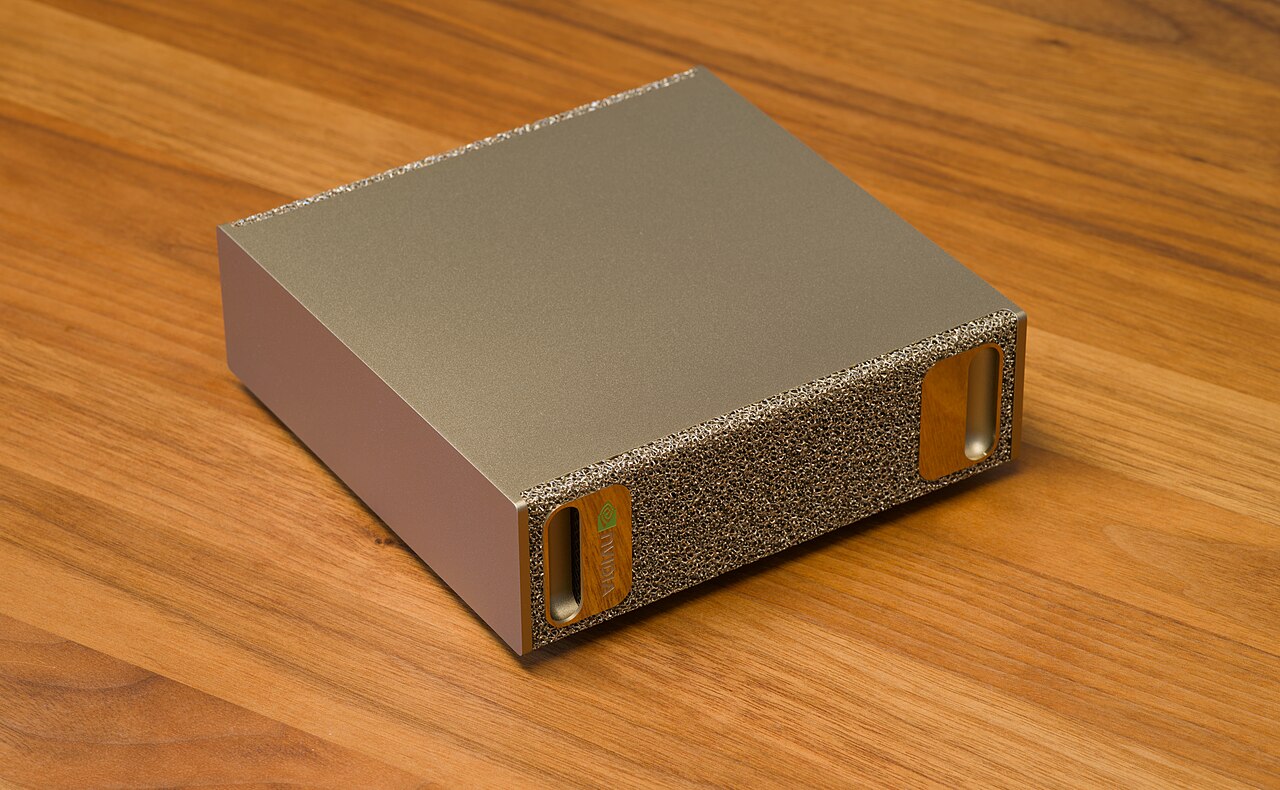
A compact GB10 system with enough unified memory and connectivity to support serious local AI development and deployment work.
Photo by Daniel Lu. Resized from the original. Licensed under CC BY-SA 4.0.
Beyond a powerful workstation
A capable AI computer can run many tools. Operators still need a coherent way to connect approved workloads, understand system state, and keep local and external processing choices explicit.
Approved clients and workflows connect to the platform instead of being tied to one model process or one temporary experiment.
Local execution is the default posture. An external provider requires an operator decision, valid credentials, and an eligible workload.
A model responding once is not enough. Pilot acceptance focuses on the complete useful path, operator review, failure behavior, and repeatability.
A bounded pilot
A useful pilot is narrower than a generic AI installation. The right starting point is one owned system, a small set of valuable workflows, and acceptance criteria that can be observed.
The wider GB10 family
DGX Spark is not the only compact system built around NVIDIA's GB10 Grace Blackwell Superchip. Partner systems widen the candidate hardware pool, but shared silicon does not make every configuration interchangeable.
ASUS describes a compact GB10 system with 128 GB of coherent unified memory and DGX OS.
View the official ASUS product page Candidate system
HP offers a GB10 AI station with 128 GB of coherent unified memory and its own platform tooling.
View the official HP product pagePhoto by TaurusEmerald. Resized from the original. Licensed under CC BY-SA 4.0.
Lenovo positions the ThinkStation PGX as a GB10 workstation designed specifically for AI development.
View the official Lenovo product guideCandidate listing is informational, not a zOvermind support claim. Firmware, storage, networking, thermals, vendor software, and lifecycle support can differ, so each system needs evidence before entering the supported matrix.
Evidence boundaries
The public story stays at the product-contract level: expected behavior, data boundaries, acceptance evidence, and stated limitations. Customer-specific design follows a scoped technical review.
ARM64 development and private-pilot preparation are active. Each actual system and workload still receives its own fit and acceptance review.
Voice work has executed on a Jetson Orin node and media work on a separate x86 NVIDIA GPU worker while the requesting client retained one platform entry point.
A working internal system does not yet establish self-service installation, every model and tool combination, or support for every GB10 partner configuration.
Performance depends on the chosen workload and configuration. Domain-specific controls and customer requirements need separate validation.
Practical questions
No. zOvermind is an independent product from Masterful Creations STEAM Academy, LLC. NVIDIA and DGX are trademarks of NVIDIA Corporation. No affiliation or endorsement is implied.
No. Hardware is one part of the fit. The workload, software state, data boundary, operational environment, and acceptance criteria also matter.
Local execution is the default platform posture. External processing is unavailable unless an operator enables a provider, supplies valid credentials, and allows an eligible route.
Cross-node execution has been proven internally for specific voice and media paths. The broader supported hardware and workload matrix remains evidence-gated. See the multi-node product boundary.
No. The current public path is a launch list for private-pilot updates, not a purchase page or a self-service installer.
Operators need clear product behavior, data boundaries, and acceptance evidence first. Technical designs and customer-specific configurations are shared only in an appropriate, scoped review.
Join the launch list and select DGX Spark or GB10. We will send one confirmation first, then contact confirmed subscribers when private-pilot access opens.
Get pilot updates